Architectural Wayfinding System vs. Standard Signage: What Is the Difference?

August 21, 2026 · Updated: August 28, 2026

Signage vs. Wayfinding: Choosing the Right Solution for Your Property

One of the most frequent queries in commercial development is: "Should I just order directional signage, or do I need a complete architectural wayfinding system?" While these terms are often used interchangeably, they represent fundamentally different concepts. Making the wrong choice can lead to severe operational friction and user confusion within a facility.

To put it simply:

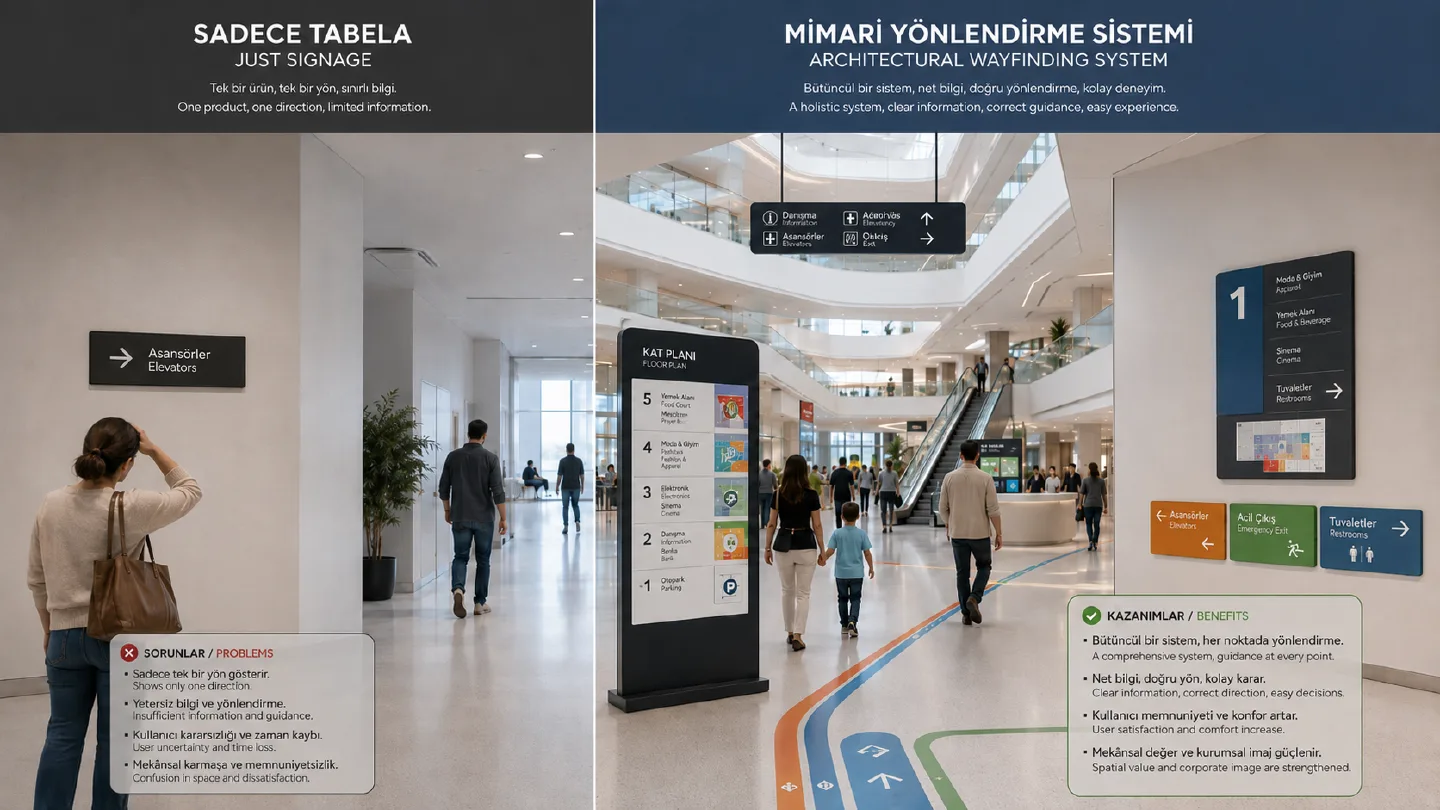
Signage → A single, standalone product.

Architectural Wayfinding System → A holistic, strategic framework.
What is Standard Signage?

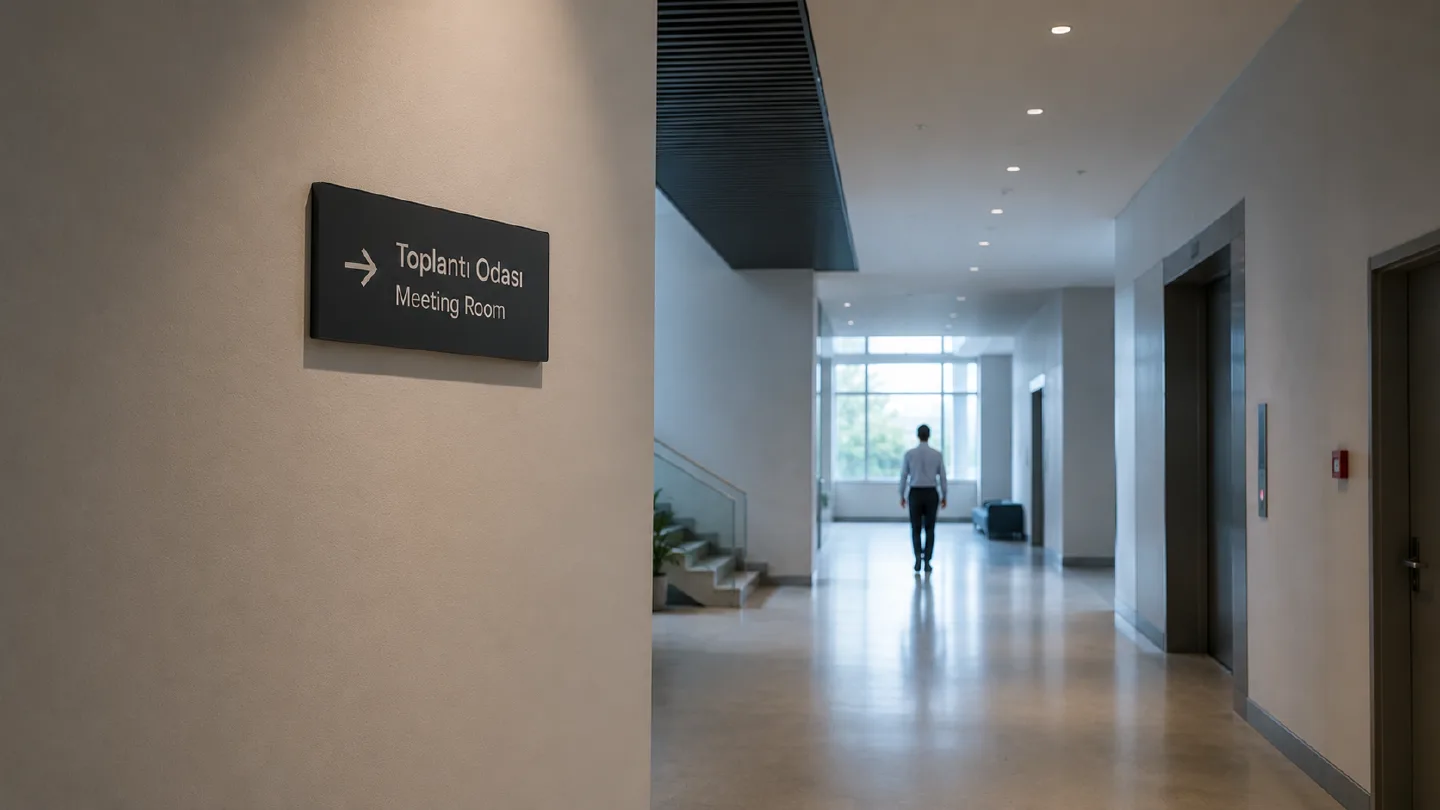
A sign is an individual, isolated physical element used to identify:

  • A specific door or room,
  • A designated zone,
  • A single direction.

Typically, standalone signage is chosen for fragmented, quick-fix requirements such as:

"Let’s place an arrow over here."

"We need to list the floor names on this wall."

"Let’s print numbers for these doors."

However, standalone signage falls short because it:

  • Does not guide the user seamlessly from their point of entry to their destination.
  • Fails to address complex decision-making points.
  • Cannot prevent disorientation in complex, multi-layered environments.

For this reason, relying solely on standard signs is highly insufficient for hospitals, shopping malls, government buildings, and large-scale architectural projects.

What is an Architectural Wayfinding System?

An architectural wayfinding system is a professional spatial navigation framework that maps out and solves the user’s entire journey—from the exact moment they enter the property until they successfully reach their destination.

The core question shifts from "Where should we hang a sign?" to "What is the user experiencing here, and how do they make navigation decisions?"

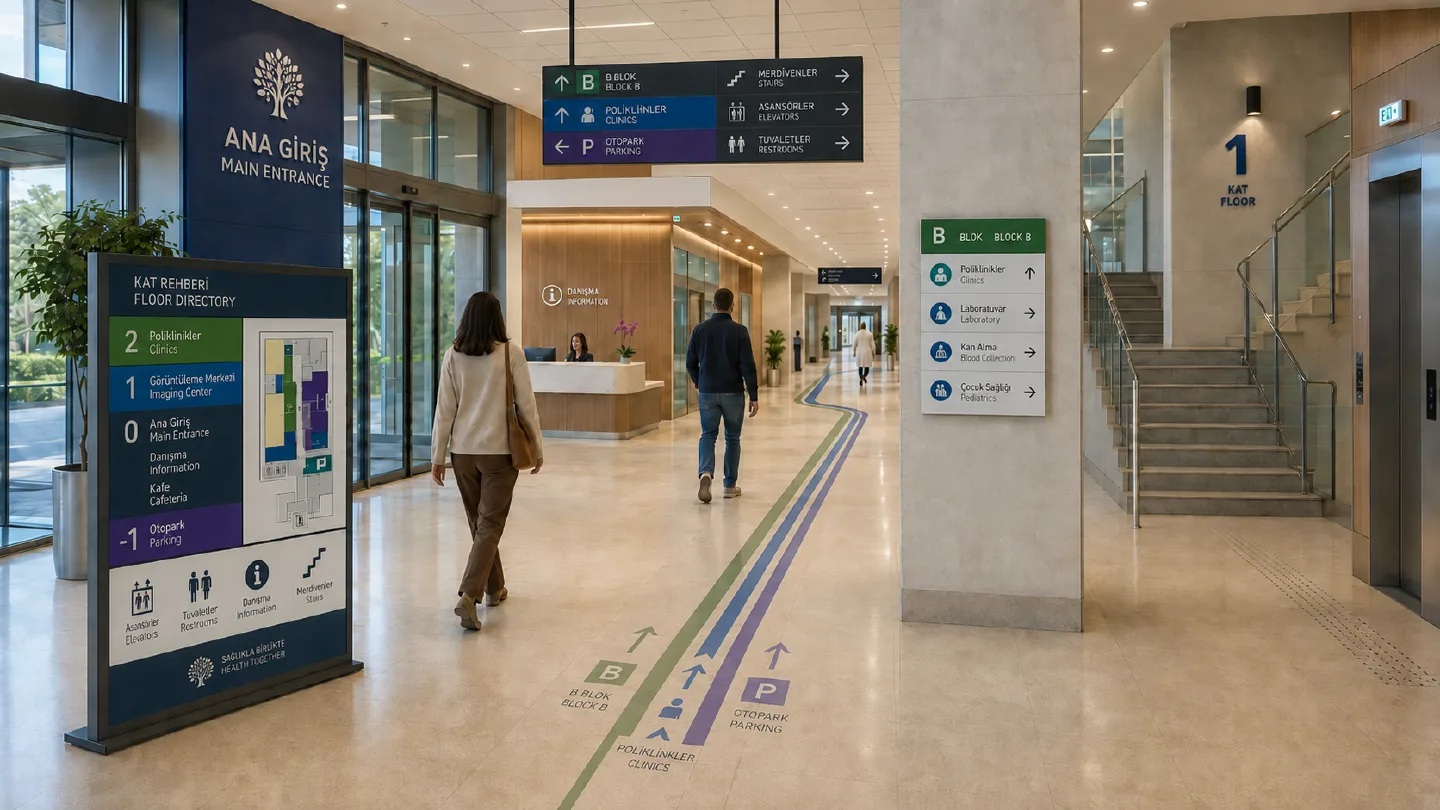
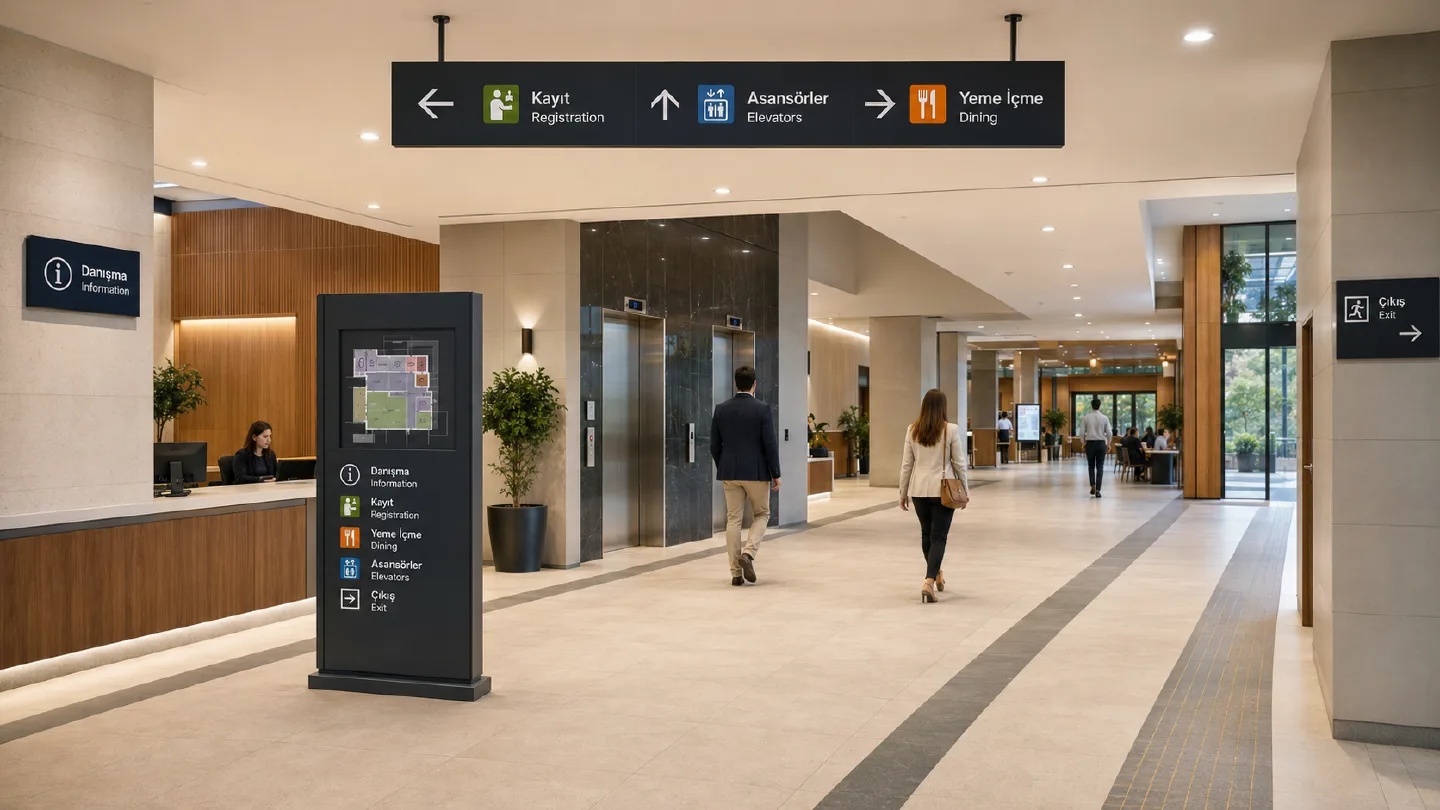
A comprehensive architectural wayfinding solution encompasses:

  • Directional and informational signs.
  • Integrated color-coding and zone mapping.
  • Strict typography and high-contrast legibility systems.
  • Universal pictograms, symbols, and iconography.
  • Clear structural hierarchies (floors, blocks, and functional departments).
  • Strategic positioning at critical decision points.

In the global architectural industry, this comprehensive approach is widely recognized and searched for as an environmental graphic design or wayfinding system.

Where is Standalone Signage Insufficient?

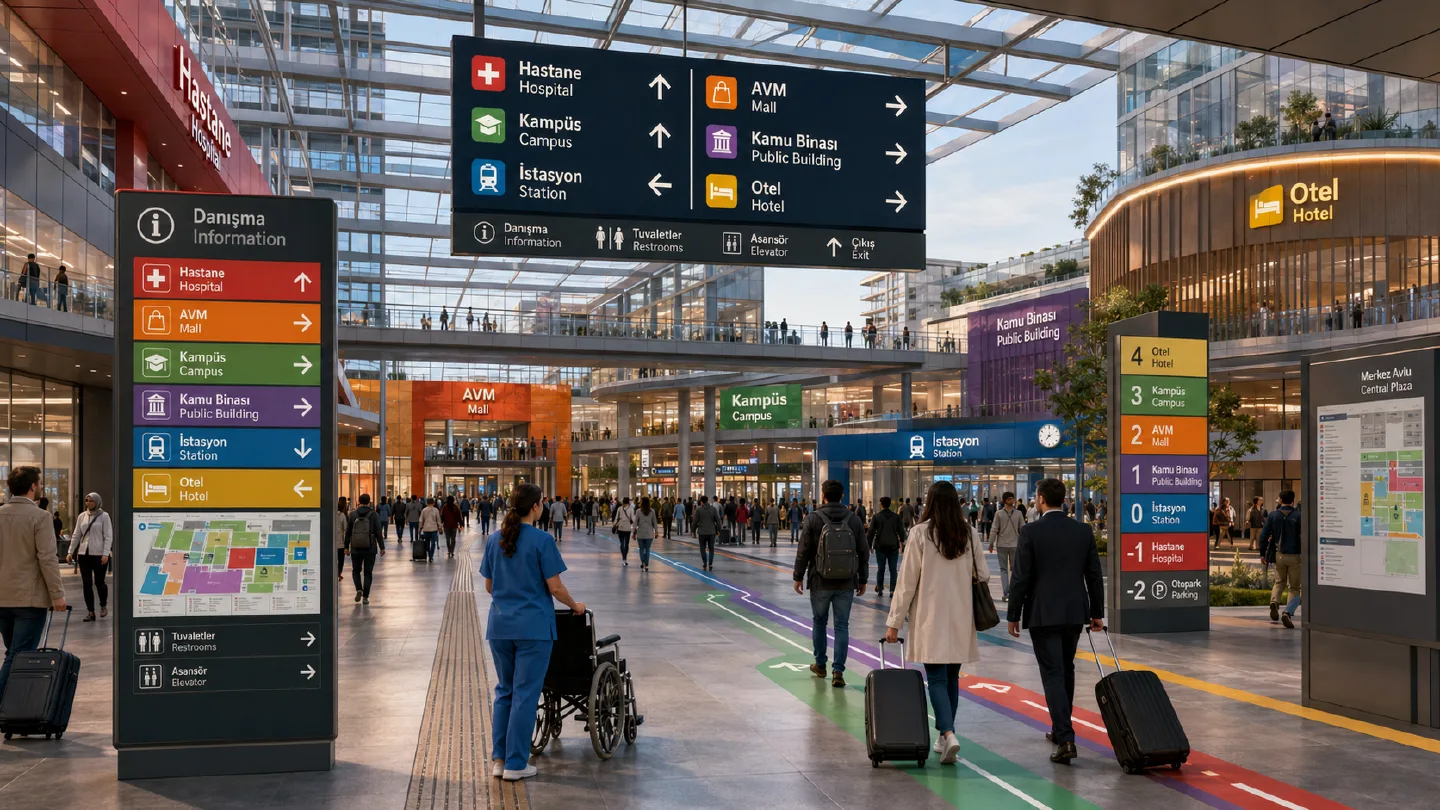
Relying merely on standard signs is a critical mistake in complex facilities, including:

  • Hospitals and healthcare facilities
  • Shopping malls and retail developments
  • University campuses and corporate headquarters
  • Government and civic buildings
  • Transportation hubs and transit networks
  • Hotels and large-scale hospitality resorts

In these environments, visitors are often:

Experiencing elevated stress levels, Rushing against time, Entirely unfamiliar with the layout.

Consequently, an integrated, holistic architectural wayfinding system is an absolute necessity.

What are the Benefits of a Professional Wayfinding System?

A professionally engineered wayfinding network delivers measurable operational advantages:

  • Eliminates the need for visitors to stop and ask for directions.
  • Minimizes foot traffic bottlenecks and wrong turns.
  • Reduces lost time and increases operational efficiency.
  • Strengthens the corporate perception and premium feel of the space.
  • Significantly boosts patient, visitor, and customer satisfaction rates.

Particularly, hospital signage systems and mall wayfinding projects are evaluated directly by these key performance metrics.

Which One Should You Choose?

If your property is:

  • Large-scale or multi-story,
  • Caters to diverse user profiles (e.g., patients, customers, staff, international visitors),
  • Experiences high-volume foot traffic circulation,

You do not just need signs; you require a complete architectural wayfinding system. The physical signs are merely the visible touchpoints of that broader strategy.

Yöntime | Professional Architectural Wayfinding Systems

Yöntime is a premier architectural signage firm specializing in the design, engineering, and manufacturing of comprehensive wayfinding systems and commercial signage solutions for hospitals, shopping centers, public infrastructures, and urban projects.

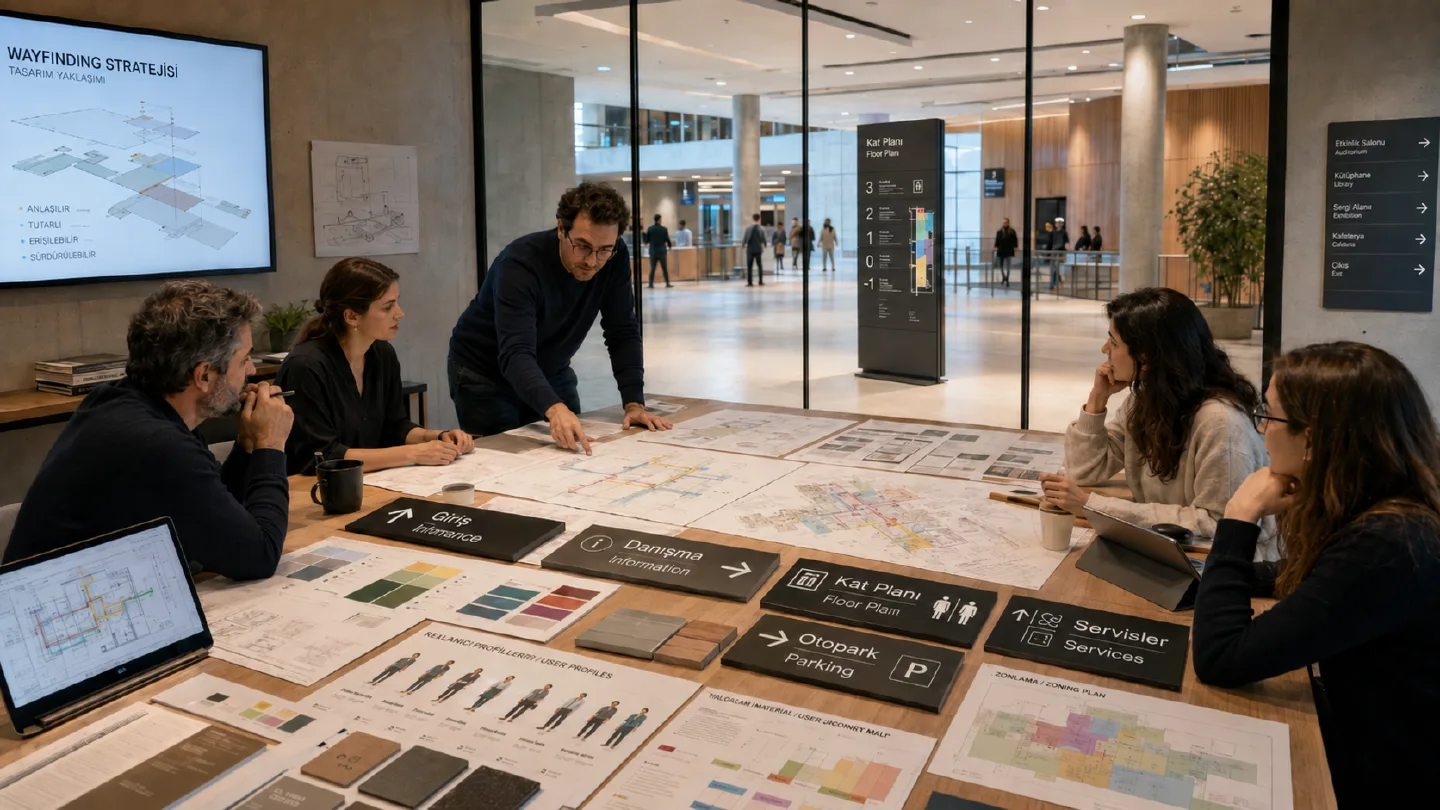
For every project, our engineering and design teams:

  • Deeply analyze user behavior and traffic flows.
  • Strategically map out spatial decision points.
  • Seamlessly balance legibility, material durability, and architectural harmony.

The Result: We don't just deliver signs; we manufacture highly functional, intuitive, and professional wayfinding systems that work.